
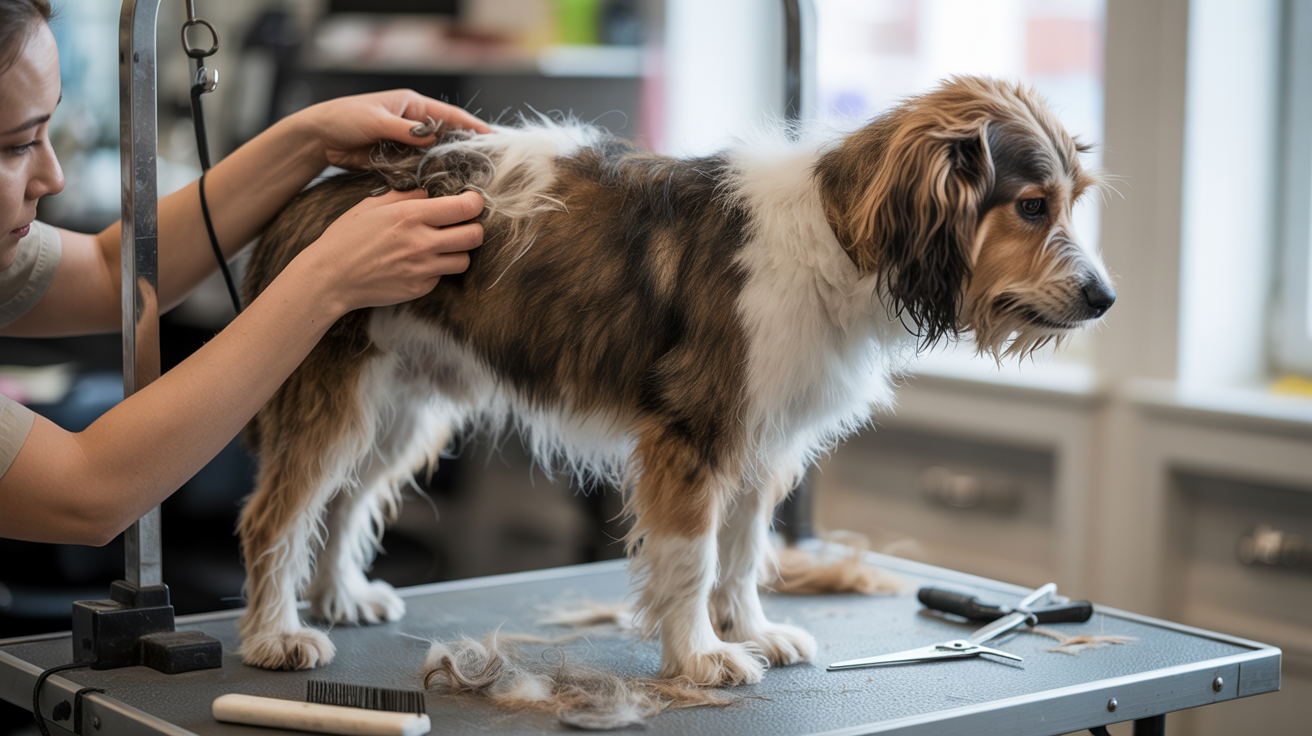
It usually starts small. A little tangle behind the ear. A rough patch under the collar that you keep meaning to brush out. A knot behind one leg that seems manageable enough.
Then one day you run your hand through your dog’s coat and realize it’s no longer just a tangle. It’s a tight, dense, painful mat – and it’s brought a few friends with it.
Matted fur is one of the most common issues we deal with here at Town & Country Grooming in Odessa, TX. We see it in dogs of all breeds and ages, and we see it in cats too. And while it might look like a cosmetic problem, matted fur is far more serious than most pet owners realize.
Left untreated, mats restrict blood flow, trap moisture and bacteria against the skin, cause chronic pain, and hide conditions like sores, infections, and even parasites. In severe cases, mats can cut off circulation to a limb entirely.
The good news? Professional groomers deal with matting every single day – and we have the tools, techniques, and experience to handle even the worst cases safely and humanely. In this post, we’re pulling back the curtain on exactly what happens when a matted dog or cat walks through our door.
What actually causes matted fur – and why it gets worse fast
Mats form when loose, dead fur gets tangled with live fur and compresses under friction and moisture. Every time your dog moves – walks, shakes, scratches, rolls – hairs rub together. Without regular brushing to remove loose hair, those strands weave into each other and tighten over time.
What starts as a small knot becomes a firm clump. That clump collects more loose hair, plus dirt, dead skin, and moisture. It grows denser, presses closer to the skin, and pulls tighter with every movement. This is why matting escalates so quickly once it starts – it feeds on itself.
Several factors make matting worse, and in West Texas, we see all of them:
- Coat type – Curly, wavy, and long-coated breeds are the most prone. Doodles, Poodles, Shih Tzus, Cocker Spaniels, and Maltese top the list in our Odessa salon. Their fur does not shed normally – loose hair stays in the coat and tangles instead of falling out.
- Friction zones – Mats love to form anywhere there is constant movement or pressure: behind the ears, under the collar and harness, in the armpits, behind the legs, around the tail, and under the belly. These are the spots most owners miss during at-home brushing because they are hard to reach.
- Moisture – Bathing a dog without fully drying and brushing the coat afterward is one of the most common causes of rapid matting. Wet fur clumps together and dries locked into tangles. In Odessa’s dusty environment, dogs who play outdoors then come inside damp are especially vulnerable.
- Accessories – Collars, harnesses, sweaters, and even post-surgery cones create constant friction against the coat. A dog who wore a cone after a vet visit can develop significant matting under the collar area within just a few weeks.
- Infrequent brushing – The single biggest cause. A five-minute brush session three times a week prevents the vast majority of matting. Without it, even short periods of neglect can lead to serious coat problems – especially in high-friction areas.
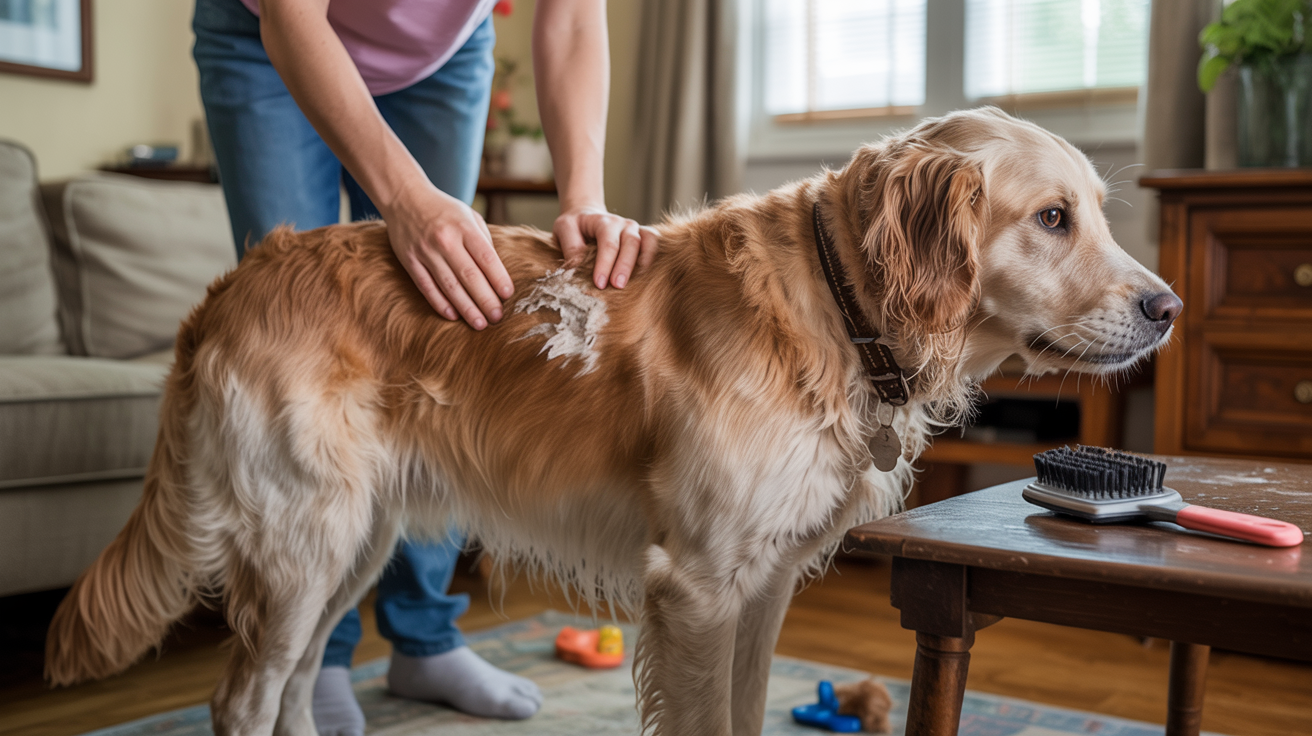
Why matted fur is a health problem, not just a grooming problem
This is the part most pet owners do not fully appreciate until they see it firsthand. Mats are not just unsightly – they are genuinely harmful to your pet’s health and wellbeing.
- Pain and skin damage – A tight mat pulls constantly on the skin beneath it. Imagine a rubber band wrapped around a pinch of your own skin, pulling tighter every time you move. That is what a mat feels like for your dog, all day, every day. Over time this causes raw, irritated skin beneath the mat that the owner often cannot see.
- Infection – Mats trap moisture, dead skin, and bacteria against the coat, creating warm, dark conditions where infections thrive. Hot spots are commonly found under mats when we remove them. We have uncovered open sores, severe rashes, and skin conditions that had been completely hidden under a mat for weeks.
- Parasite infestation – Fleas, ticks, and mites love mats. The dense tangle gives them a perfect hiding place where they can breed undisturbed. Regular grooming is one of the most effective ways to catch and prevent parasite problems early.
- Restricted circulation – In severe cases, particularly around the legs and paws, mats can tighten enough to restrict blood circulation entirely. We have seen dogs come in with mats so tight around their paws that there was visible swelling and, in extreme cases, wounds similar to pressure sores.
- Psychological stress – Dogs in chronic pain from mats become anxious, irritable, and avoidant of touch. Many owners notice behavioral changes that resolve completely once the matting is removed and the dog is comfortable again.
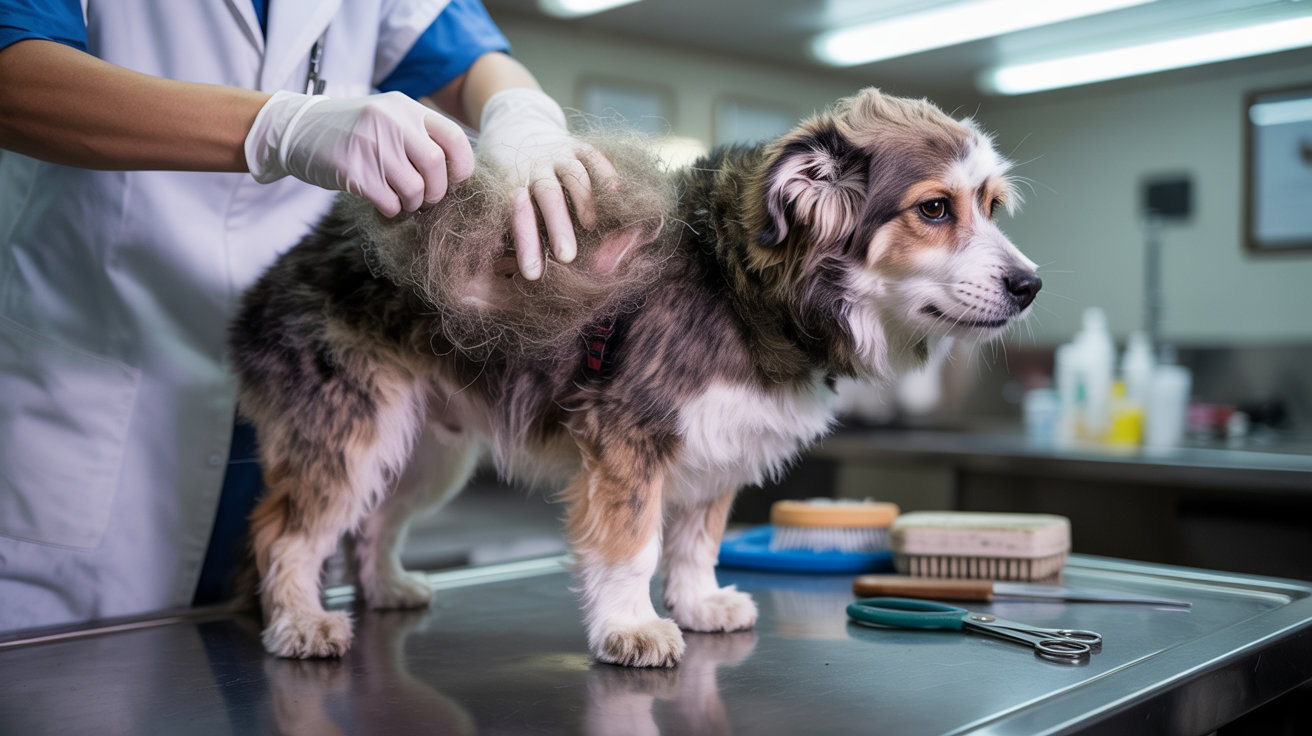
The bottom line: if you can see or feel mats on your pet, they are already uncomfortable. The longer mats are left, the worse – and more expensive to treat – they become.
The 3 levels of matting – and what groomers do at each stage
Not all mats are created equal. When a pet comes into our Odessa salon, the first thing we do is a thorough hands-on assessment – running our fingers through the coat to feel the density, location, and extent of the matting before we do anything else. This assessment determines everything: which tools we’ll use, how long the appointment will take, and what outcome the owner can realistically expect.
Mild
Small, isolated tangles that have not yet tightened against the skin. Often found behind the ears or under the collar. Can typically be brushed out with a slicker brush and detangling spray. No shaving required. Coat can be preserved fully.
Moderate
Larger mats covering specific areas like armpits, legs, or belly. Still not fully pelted. Groomers use dematting combs, conditioning sprays, and patient sectioned brushing. Some areas may need spot shaving. The appointment takes significantly longer.
Severe / Pelted
The entire coat or large sections have fused into a solid mass against the skin. Brushing is impossible and would cause serious pain. The only humane option is a full shave-down. Skin must be inspected for wounds and infection post-shave.
Step by step – exactly how professional groomers handle matted dogs
Here is what the process looks like inside our Odessa grooming salon when a matted dog comes in:
Step 1 – The assessment
Before we touch a single tool, we do a complete hands-on evaluation of the coat. We run our fingers through every area – not just what is visible on top, but underneath and in all the friction zones. We assess severity, check for skin conditions, and talk to the owner about their expectations and the pet’s history. Honesty at this stage matters – we explain exactly what is possible and what is not before we begin.
Step 2 – Never bathe first
This surprises a lot of owners, but one of the most important rules in professional grooming is this: never bathe a matted dog before removing the mats. Water tightens mats dramatically – turning a manageable tangle into a rock-solid, skin-bound knot that is far more difficult and painful to remove. All dematting happens on a dry coat first.
Step 3 – Dematting tools and technique for light to moderate coats
For Level 1 and mild Level 2 matting, we work through the coat section by section using a combination of professional slicker brushes, metal greyhound combs, and dematting rakes. A dog-safe detangling or conditioning spray is applied to help loosen the mat without pulling. We always hold the base of the hair near the skin while working – this transfers the tension to our hand, not the dog’s skin. We work from the outside edges of the mat inward, loosening a little at a time rather than forcing the tool through.
This process is slow and requires patience. A moderately matted dog can take several hours to demat properly. We take regular breaks, offer treats, and read the dog’s comfort level constantly. If a dog is showing signs of significant distress, we stop and reassess.
Step 4 – Spot shaving moderate areas
For mats that are too tight to brush out safely – particularly in sensitive areas like armpits and groin – we use professional-grade clippers with the appropriate blade to carefully shave underneath and through the mat. Human clippers are never used. We pull the skin gently taut away from the clipper blade and work slowly, never forcing the blade into a tight mat. The goal is to release the mat cleanly without nicking the delicate skin beneath.
Step 5 – The full shave-down for severe or pelted coats
When a coat is severely pelted – matted all the way to the skin across large areas – brushing is not a humane option. Attempting to demat a pelted coat causes intense pain and can cause serious skin injury. In these cases, the kindest and safest solution is a full shave-down using a short professional clipper blade.
We work carefully and methodically, keeping the blade flat against the skin and moving slowly. Severely matted coats often hide wounds and skin conditions underneath, so post-shave inspection is just as important as the shave itself. We examine every inch of newly exposed skin for sores, hot spots, infections, or injuries that may need veterinary attention.
We always prepare owners beforehand: a shave-down often reveals a very different looking dog than they are used to. Some owners feel guilty when they see their pet’s coat reduced to a short even trim. We gently remind them that their dog – now free from months or years of painful pulling – is the most comfortable they have been in a long time.
Step 6 – Bath, dry and finish
Once all mats have been removed, the dog gets a thorough bath with a deep-conditioning shampoo to soothe the skin. We dry completely, then do a final brush-through to check for any remaining tangles. For shaved-down dogs, a skin-soothing treatment is applied to any areas of irritation.
Step 7 – The prevention conversation
Before the owner picks up their pet, we always take a few minutes to talk through what caused the matting and exactly what they can do at home to prevent it happening again. We recommend the right brush for their dog’s coat type, show them which areas to focus on, and advise on a grooming frequency that is realistic for their lifestyle. This conversation is just as important as the groom itself.
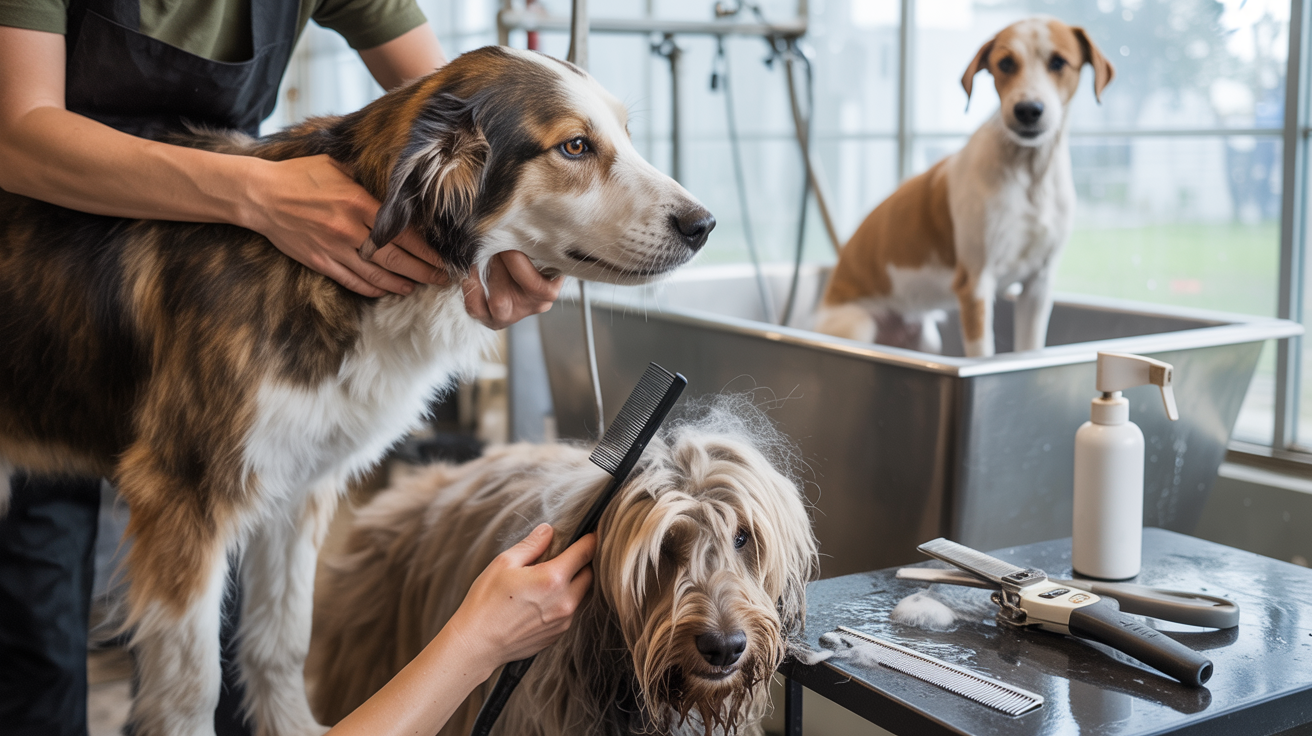
WARNING: Never try to cut mats with household scissors. Mats sit flat against the skin, making it almost impossible to distinguish fur from flesh. Scissor injuries to matted dogs are one of the most common grooming-related emergencies vets see. Always call a professional groomer for anything beyond a small, loose surface tangle.
What about cats? Matting in felines is a different challenge entirely
Cats are fastidious self-groomers – which is why when a cat develops matted fur, it is often a sign of an underlying health issue rather than simple neglect. Arthritis, obesity, dental pain, diabetes, kidney disease, and other systemic conditions can all make it difficult or painful for a cat to reach certain areas, leading to mat formation across the lower back, hindquarters, and belly.
This is why we always recommend owners of matted cats consult their veterinarian alongside booking a grooming appointment. The mats need to be removed – but the reason they formed in the first place matters just as much.
Cat grooming requires a different skill set and a great deal of patience. Cats are far less tolerant of the grooming process than most dogs, and a stressed cat can become dangerous very quickly. Our grooming team is experienced in low-stress cat handling – working slowly, using minimal restraint, and taking as many breaks as the cat needs.
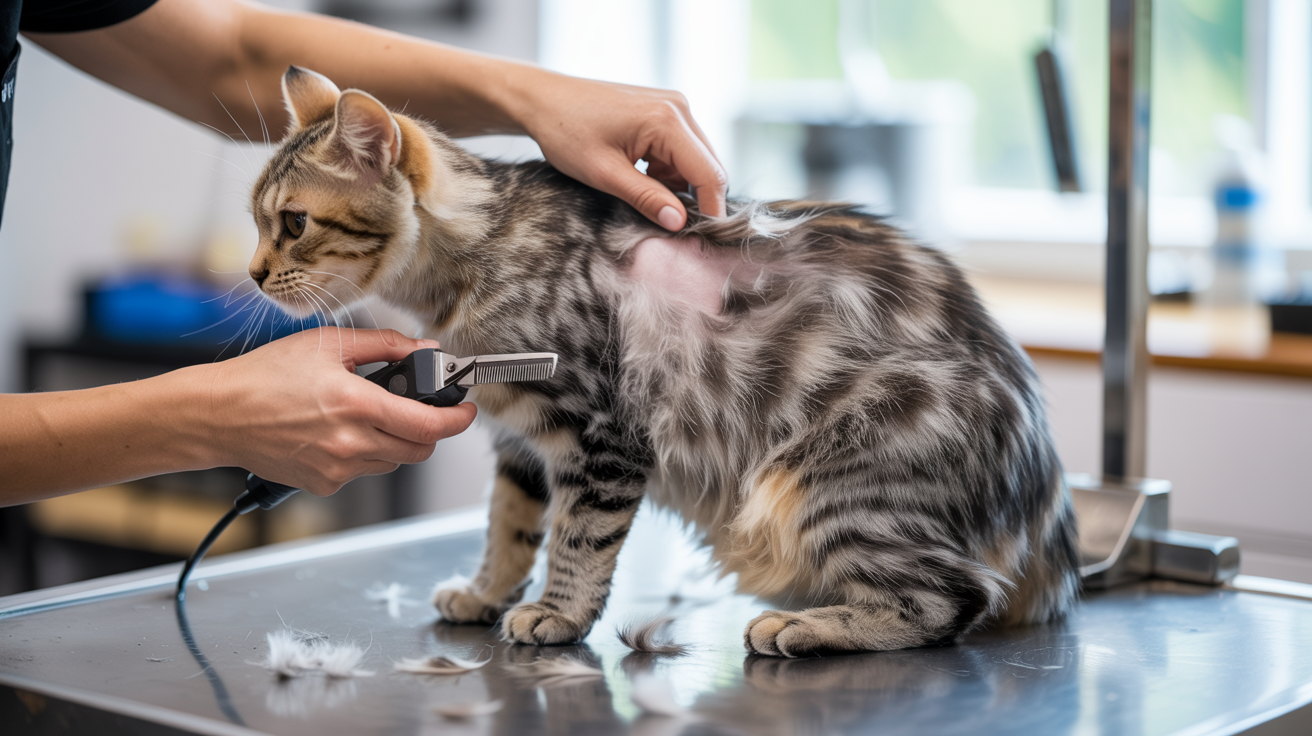
For cats with significant matting, a lion cut – shaving the body coat short while leaving the face, legs, and tail tip full – is often the most practical and comfortable solution. It provides immediate relief from the pulling of mats and gives the coat a clean, even base to regrow from.
How to prevent matting – the real, practical guide
The best matted fur treatment is the one you never need. Here is what our Odessa groomers recommend to every pet owner:
- Brush consistently, not occasionally – A five-minute brush three times a week prevents the vast majority of matting in most breeds. Daily brushing is recommended for curly and long-coated dogs. The key is regularity – occasional marathon brushing sessions are far less effective than short, frequent ones.
- Use the right tools – A slicker brush removes surface tangles and loose hair. A metal greyhound comb checks for hidden mats beneath the top layer of coat. Both are essential. Brushes designed for human hair are not suitable.
- Target the friction zones every time – Behind the ears, under the collar, in the armpits, behind the legs, around the tail base. These areas mat faster than anywhere else and should be checked and brushed at every session.
- Always brush before and after bathing – Bathing a dog without brushing first tightens any existing tangles. Bathing without brushing afterward while the coat is still damp locks tangles in place as the fur dries.
- Keep to a professional grooming schedule – For most dogs in Odessa, we recommend professional grooming every 4-6 weeks for curly and long-coated breeds, and every 6-10 weeks for medium coats.
In West Texas specifically, wipe down your dog’s coat after dusty outdoor play. The caliche and fine soil that blows across Odessa works into coats and accelerates tangling significantly compared to cleaner environments.
PRO TIP: If you are unsure whether your dog’s coat is truly mat-free after brushing, run a metal comb all the way from the skin to the tip of the fur. If the comb passes through smoothly with no resistance, you are clear. If it catches, you have a mat forming that needs attention before it tightens.
Is your dog or cat dealing with mats? We can help.
If your pet’s coat has gotten away from you – whether it is a few stubborn tangles or a fully pelted coat that needs a complete reset – do not try to tackle it alone. Home dematting attempts with the wrong tools or technique can hurt your pet and make the problem worse.
At Town & Country Grooming in Odessa, TX, we have handled every level of matting you can imagine – from a quick detangle to a full shave-down with post-groom skin care. We assess every pet individually, we are honest about what is possible, and we always prioritize your pet’s comfort above everything else.
Our experienced, gentle team is here Monday through Friday 7:30am to 5:30pm and Saturday 8am to 4pm at 3129 E University Blvd, Odessa, TX.
Book your appointment online or call us at (432) 366-2547. Your pet will feel like a whole new animal – because honestly, they kind of will be.
Frequently asked questions about matted fur
Is matted fur painful for dogs?
Yes – matted fur pulls constantly on the skin beneath it, causing chronic pain and discomfort. Severe mats can restrict blood circulation, trap bacteria and moisture leading to skin infections, and hide open sores. Dogs with significant matting are often in more pain than their owners realize, since dogs tend to mask discomfort naturally.
Can matted fur be brushed out or does it need to be shaved?
It depends on the severity. Light, surface-level mats can often be carefully brushed out using a slicker brush, metal comb, and detangling spray. Moderate mats may require spot shaving in sensitive areas. Severely matted or pelted coats – where the fur has fused into a solid mass against the skin – must be shaved down humanely. Attempting to brush out a pelted coat causes serious pain and potential skin injury.
How much does it cost to demat a dog professionally?
The cost of professional dematting depends on the severity of the matting, the size of the dog, and the time required. Light dematting may be included in a standard full groom. Moderate to severe matting typically incurs an additional dematting fee due to the extra time and care involved. Contact Town & Country Grooming at (432) 366-2547 for a quote based on your specific pet.
Why should I never bathe a matted dog first?
Wetting a matted coat causes the fibers to contract and tighten, turning a manageable tangle into a rock-solid, skin-bound mat that is far more difficult and painful to remove. Professional groomers always remove mats on a dry coat before bathing. This is one of the most important rules in professional pet grooming.
How do I prevent my dog’s fur from matting in Odessa TX?
The most effective prevention is consistent at-home brushing 3-5 times per week for long and curly coats combined with professional grooming every 4-8 weeks. In Odessa’s dusty West Texas environment, wiping down your dog’s coat after outdoor play also helps prevent caliche dust from accelerating mat formation. Using a metal greyhound comb – not just a brush – ensures you are catching hidden mats forming close to the skin.